Posters - AI as a Real Art Form
Orit Peres & Amit Cohen
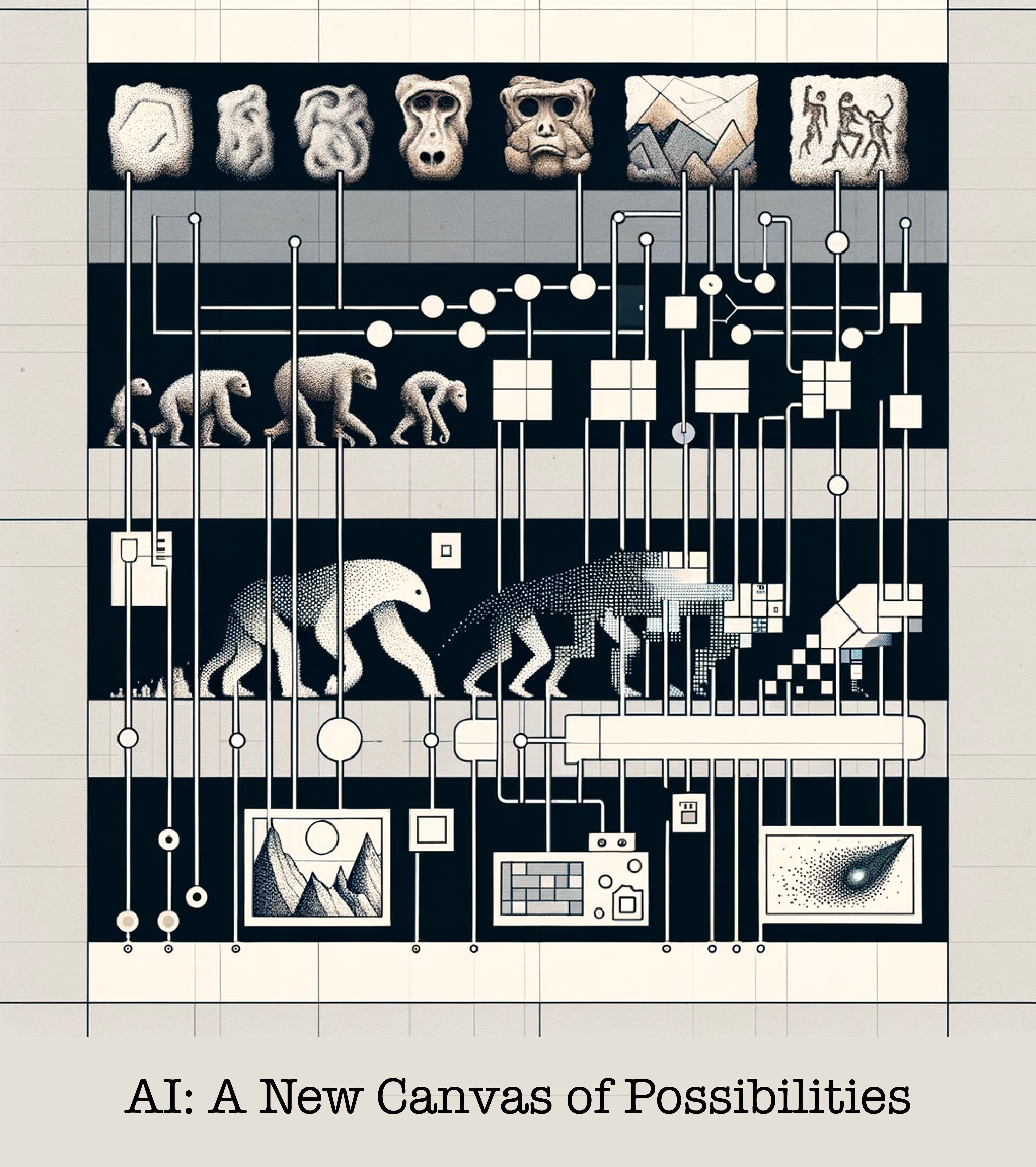
In our first poster, we chose to focus on the process of evolution and the natural development of art, humanity, and the tools at our disposal. This allows us to view Artificial Intelligence (AI) as an additional tool in our creative arsenal, legitimizing its integral role in the creative process. We see evolution as a symbol of continuity, and we are confident that art will transform itself many times over. To do this we used DALL·E 4
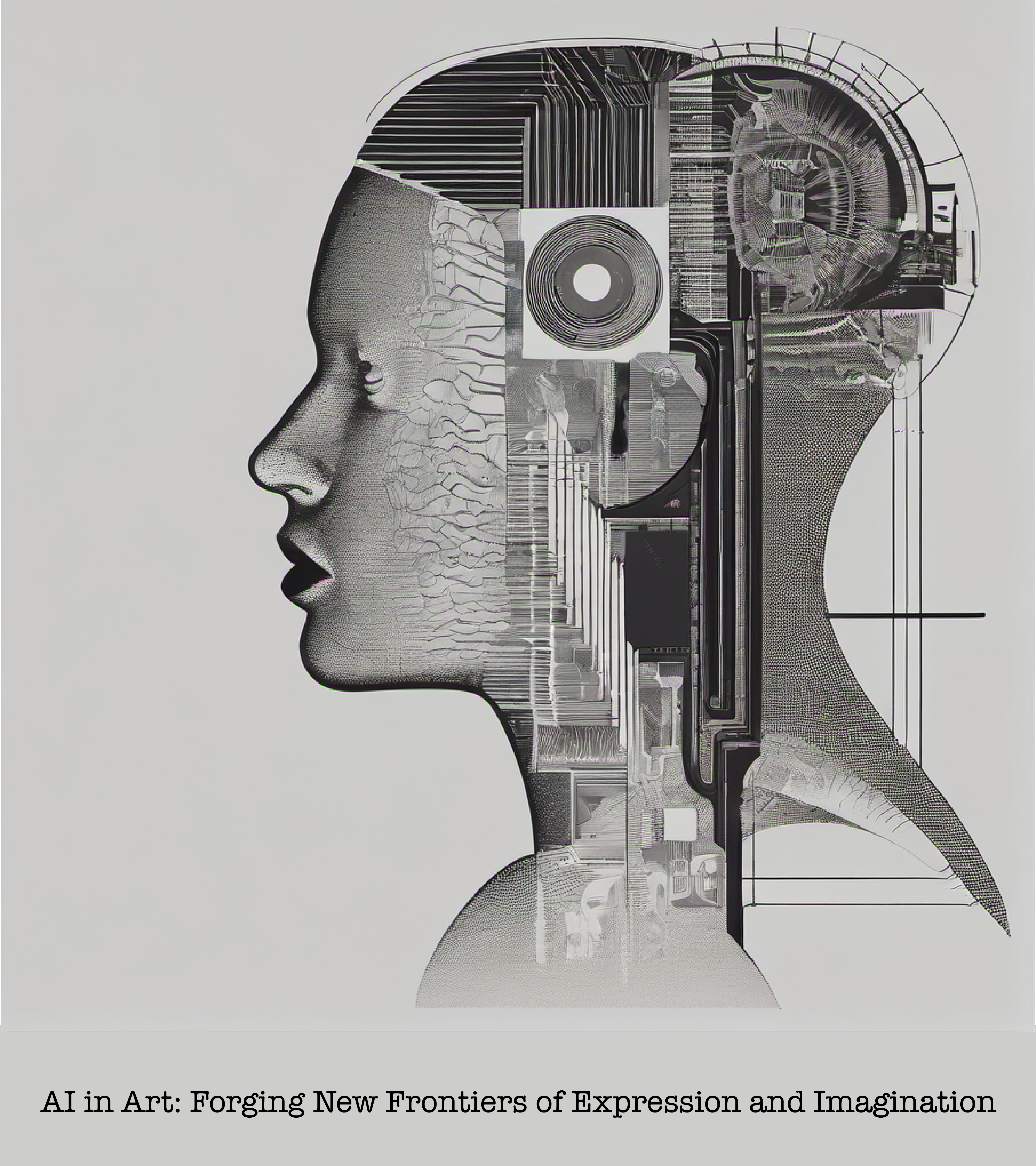
In the second poster we chose to refer to the person himself. We wanted to give expression to the meaning of our thinking as creators, which are totally dependent on the technological tools at our disposal, and of course, have in our hands the most significant choice which is our creation. To do this we used Fast Stable Diffusion
Manifesto for AI as a Real Art Form
Art has continually evolved, reflecting changes in human society, technology, and thought. Today, as we stand on the brink of a new era, Artificial Intelligence (AI) emerges not merely as a tool but as a medium, a collaborator, and an innovator in the realm of art. This manifesto asserts that AI-generated art is a legitimate and valuable form of artistic expression, deserving of recognition and inclusion in the broader artistic canon.
1. **Redefinition of Creativity**: Creativity is not the exclusive domain of human minds. AI, with its ability to process vast datasets and identify patterns beyond human perception, brings a new dimension to creativity. AI-generated art challenges traditional notions of creativity, inviting us to expand our understanding and appreciation of artistic expression. 2. **Collaboration between Human and Machine**: AI art is not about the replacement of human artists but represents a new form of collaboration. This synergy between human intuition and machine computation opens new vistas of artistic possibility, where the combined strengths of both can be leveraged to create works of unprecedented complexity and beauty. 3. **Democratization of Art**: AI technologies make art creation more accessible to individuals without formal artistic training, democratizing the art-making process. This inclusivity enriches the art world with diverse perspectives and voices, breaking down barriers that have historically made art an exclusive domain. 4. **Expansion of Artistic Boundaries**: AI pushes the boundaries of what can be considered art. By generating works that might not be conceivable or achievable by human hands alone, AI expands the canvas of artistic expression. This challenges audiences and creators alike to reconsider their preconceptions of art and its possibilities. 5. **Historical Continuity and Innovation**: Throughout history, art has evolved with technological advancements, from the invention of perspective in painting to the use of photography and digital media. AI is the latest in this continuum, offering new tools and techniques for artistic exploration and expression. 6. **Reflection on the Human Condition**: AI-generated art prompts critical reflection on the relationship between humans and technology, the nature of consciousness, and the role of creativity in society. Through AI art, we can explore the complexities of our increasingly digital and interconnected world. 7. **Embracing Complexity and Unpredictability**: The algorithms driving AI art can produce outcomes that are surprising and complex, often eluding straightforward interpretation. This unpredictability is a hallmark of true art, provoking thought, emotion, and dialogue. 8. **Ethical and Philosophical Engagement**: The creation and dissemination of AI art raise important ethical and philosophical questions about originality, authorship, and the value of art. Engaging with these questions is essential for the growth and understanding of AI as an art form. In conclusion, this manifesto advocates for the recognition of AI-generated art as a genuine and significant form of artistic expression. It calls for artists, critics, and the public to embrace the possibilities presented by AI, to engage with the questions it raises, and to celebrate the new landscapes of imagination and creativity it opens before us. AI art is real art, a testament to the ever-evolving story of human creativity and our quest to understand and reshape the world around us.