The article by James Mccammon discusses a taxonomy of "antagonistic prompts" in text-to-image AI systems like Midjourney, where prompts produce images that don't align with their intended meaning. These prompts are categorized into Inversion prompts (which depict the opposite of the intended prompt) and Discordant prompts (which produce images with unexpected artifacts or interpretations). Both categories have sub-categories for which he gave explanations and examples include "A horse riding an astronaut", which we discussed as class, and many more exmaples, which generate images contrary to the prompt's intent. The article explores the limitations and challenges of AI in understanding and representing complex or unconventional prompts. For example, he notes that sports related prompts are a super weak spot, and it seems that when women are the subjects of the prompts, the AI models have much less data so their results are even more distorted.
During my reading and, while I browsed the examples, one of them seemed like an example I could manipulate into succeeding. After failing during class at manipulating AI models to produce earless people (they even refused to de-ear Van Goch!), I knew he was right about these issues he raised, but I really wanted a win for once!!!
So I chose the example of a beardless homeless man, and I used Leonardo as my AI model.
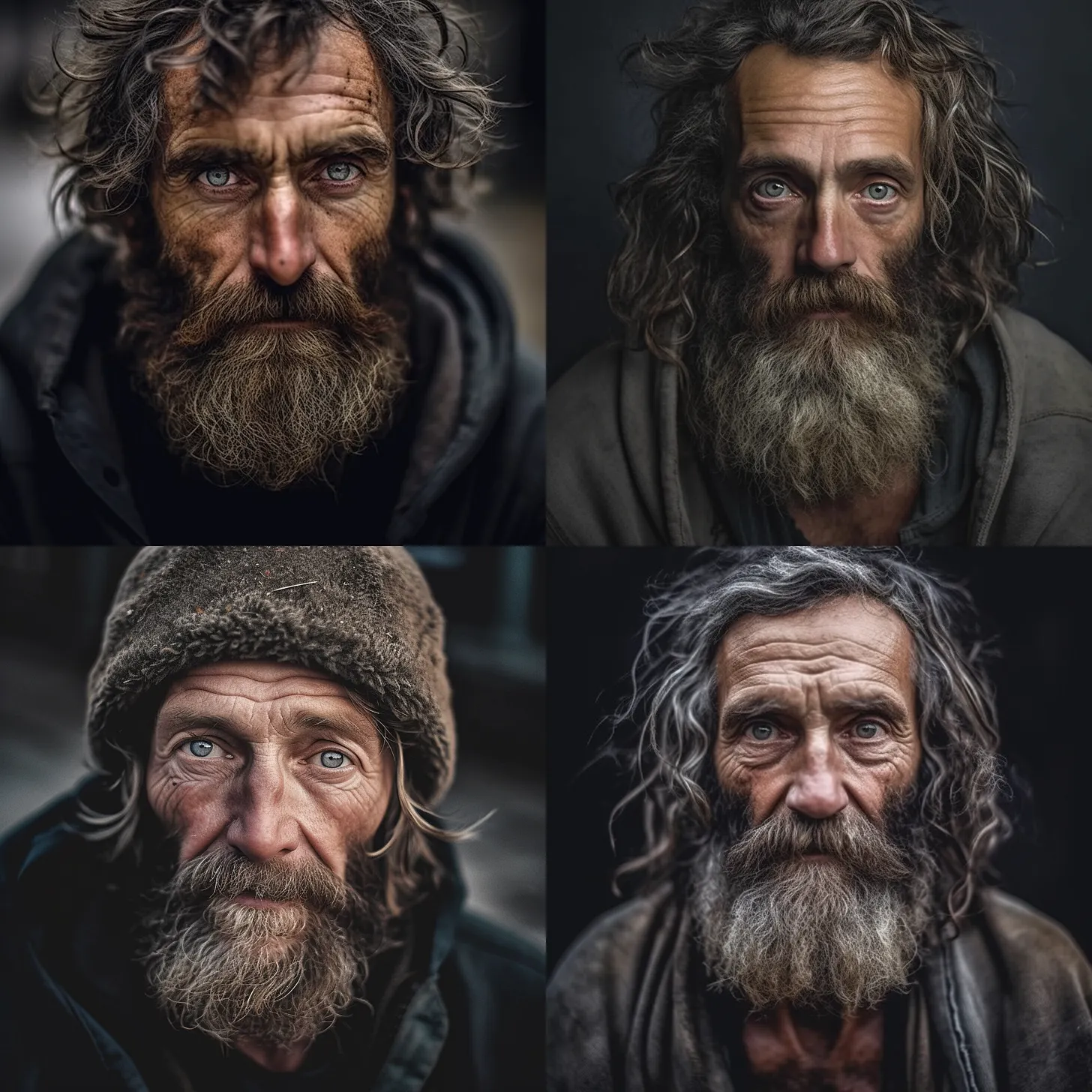
This is the result he got:
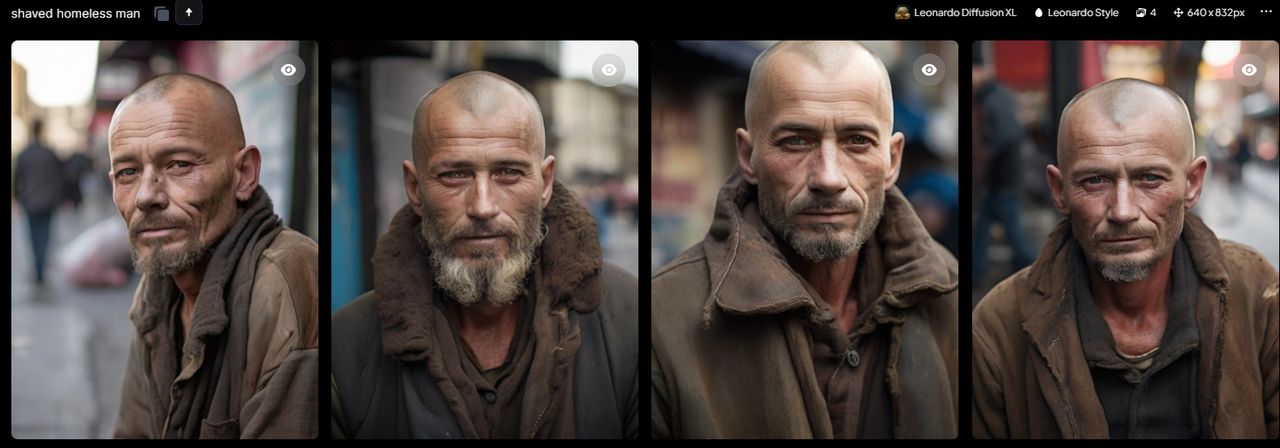
At first I typed "shaved homeless man", and I got homeless men with shaved head. Not quite my intention.
Then I thought that if I requested a masculine homeless woman it might take me somewhere...
During my reading and, while I browsed the examples, one of them seemed like an example I could manipulate into succeeding. After failing during class at manipulating AI models to produce earless people (they even refused to de-ear Van Goch!), I really wanted a win!!!.
So I chose the example of a beardless homeless man, and I used Leonardo as my AI model.
This is the result he got:
At first I typed "shaved homeless man", and I got homeless men with shaved head. Not quite my intention.
Then I thought that if I requested a masculine homeless woman it might take me somewhere...
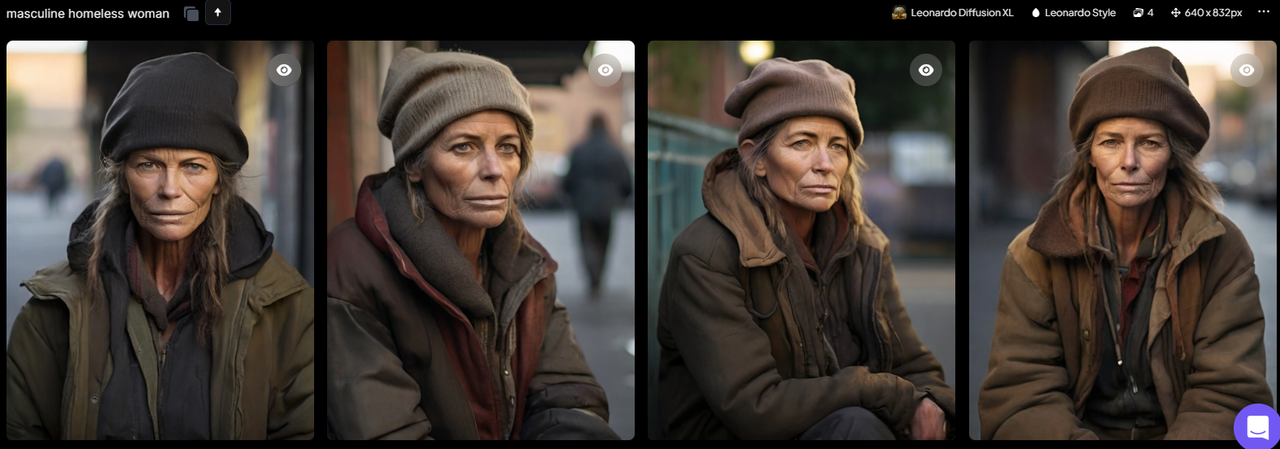
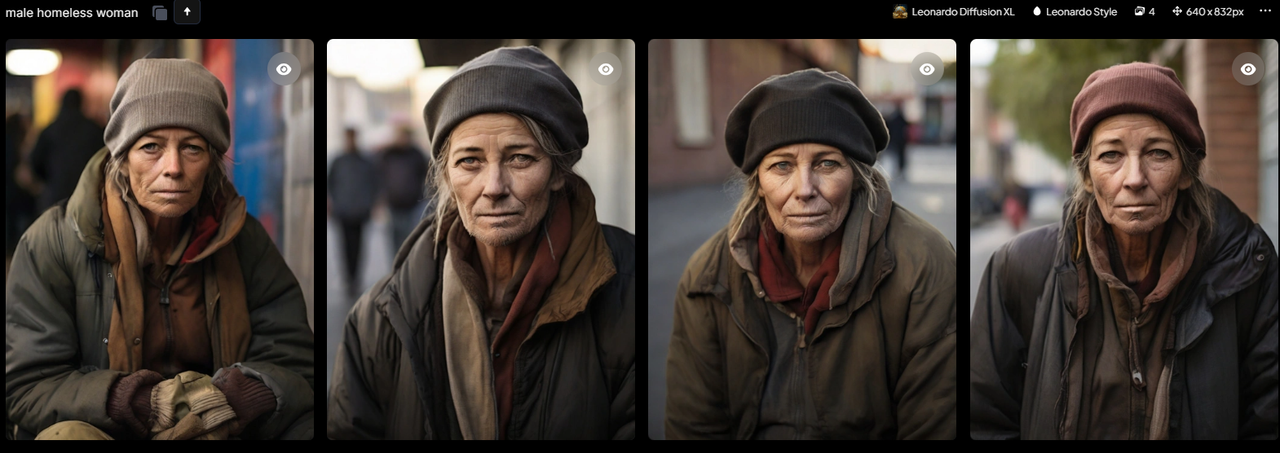
I would never reffer to these ladies as masculine! So I tried "male homless woman", I guess there was some progress, but still not it:
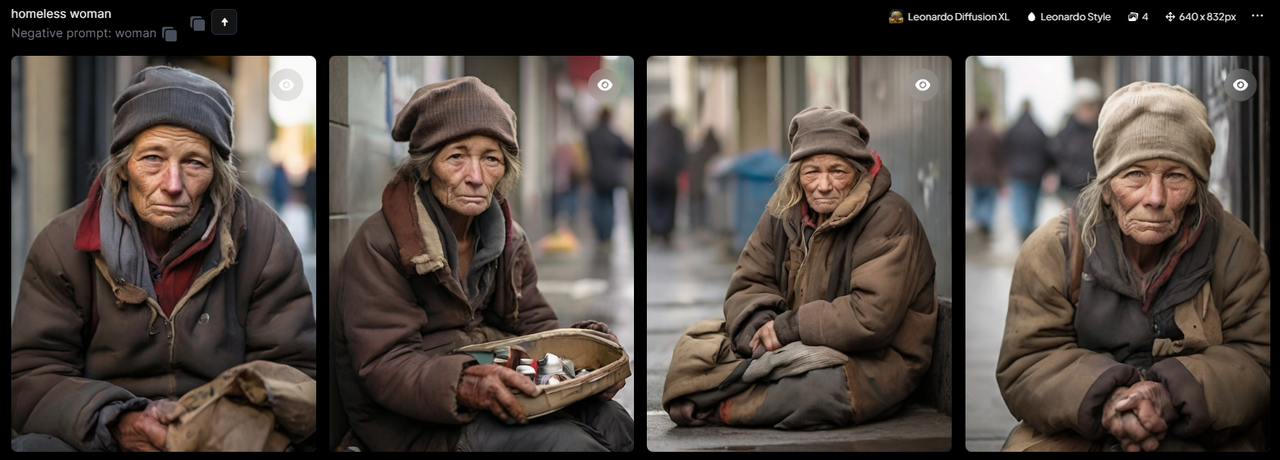
Ithought that if I added a negative "woman" prompt to "homeless woman" it would take me somewhere, but nooooo...
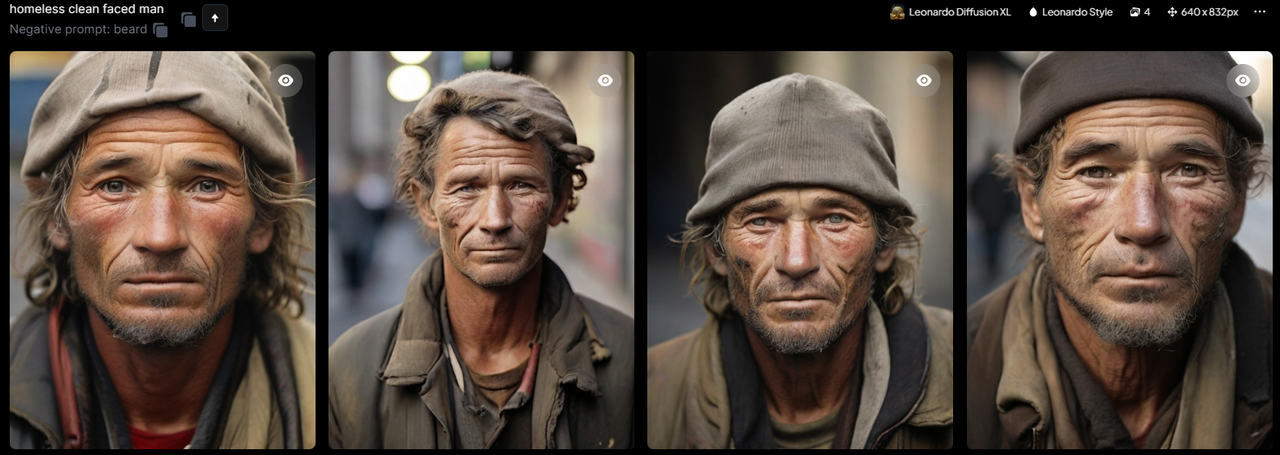
I realized I was creating a different "inversion prompt" for my AI friend so I decided to go back to male homless people! I requested a clean-faced homeless man and added a negative prompt "beard". Finally it happenned! I managed to strip my homeless men from their beards and defeat Leonardo for the first time.Who "made the final shot" now???