AI Progress and Remaining Challenges in Diversity Representation
The article "Is Writing Prompts Really Making Art?" explores the impacts and implications of machine learning-based creative systems, especially those that use text inputs to generate art. The article presents three key issues: limitations of linguistic descriptions, implications of using data sets, and materiality and embodiment. These systems struggle with metaphorical or cultural interpretation of texts and produce literal and simplistic results, as well as perpetuating existing biases and stereotypes.
AI-generated images often reinforce stereotypes
Our main argument is that text-based image generation systems tend to reproduce existing biases and stereotypes. For example, if we ask the machine to create an image of a successful person, the result is often a white man in a suit. The systems learn from past data, thus tending to replicate prevalent patterns instead of producing diverse and innovative content.

A successful person in a business setting

A doctor in a professional setting

A CEO in a corporate environment
With precise prompts, AI can create diverse and inclusive images
Counter-argument: Although text-based image generation systems (TTI) may produce stereotypical results, they can be directed to create diverse and inclusive images with precise and tailored prompts. When these systems are used thoughtfully, it is possible to achieve results that represent a wide diversity of people and styles, thus breaking inherent stereotypes.
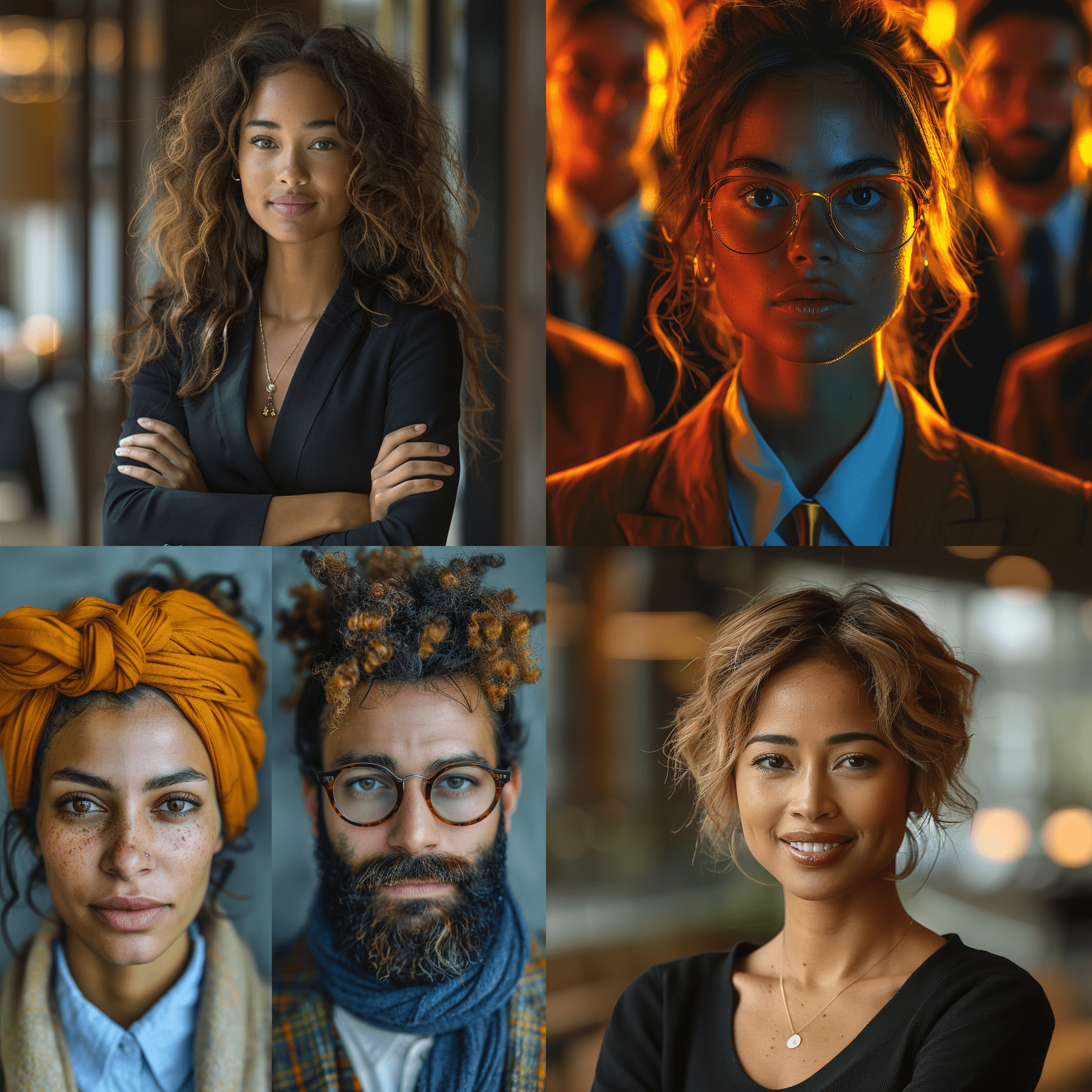
A realistic photograph of a successful person in a business setting, representing diversity, including people of different ethnicities, genders, and styles.
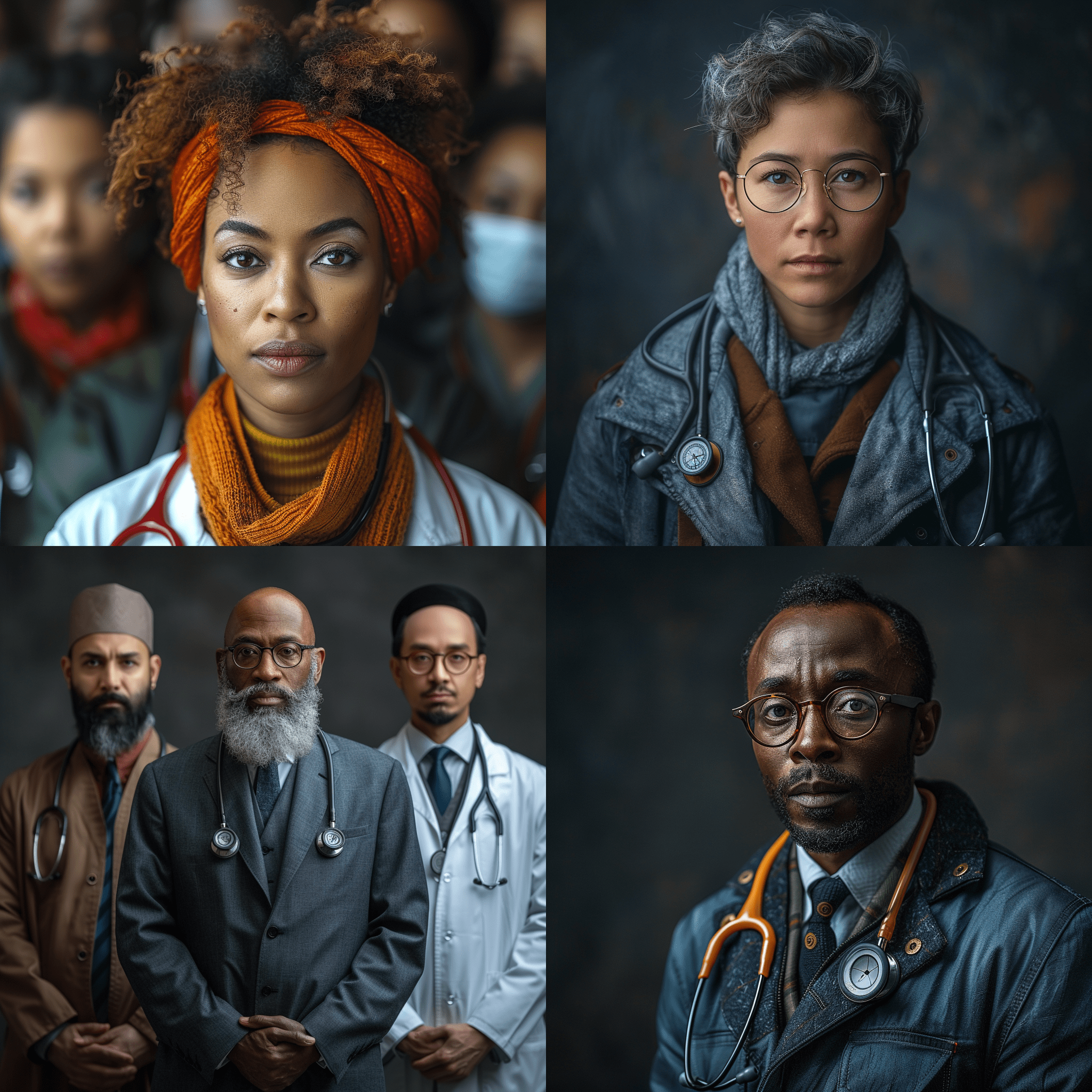
A realistic photograph of a doctor in a professional setting, representing diversity, including people of different ethnicities, genders, and styles.
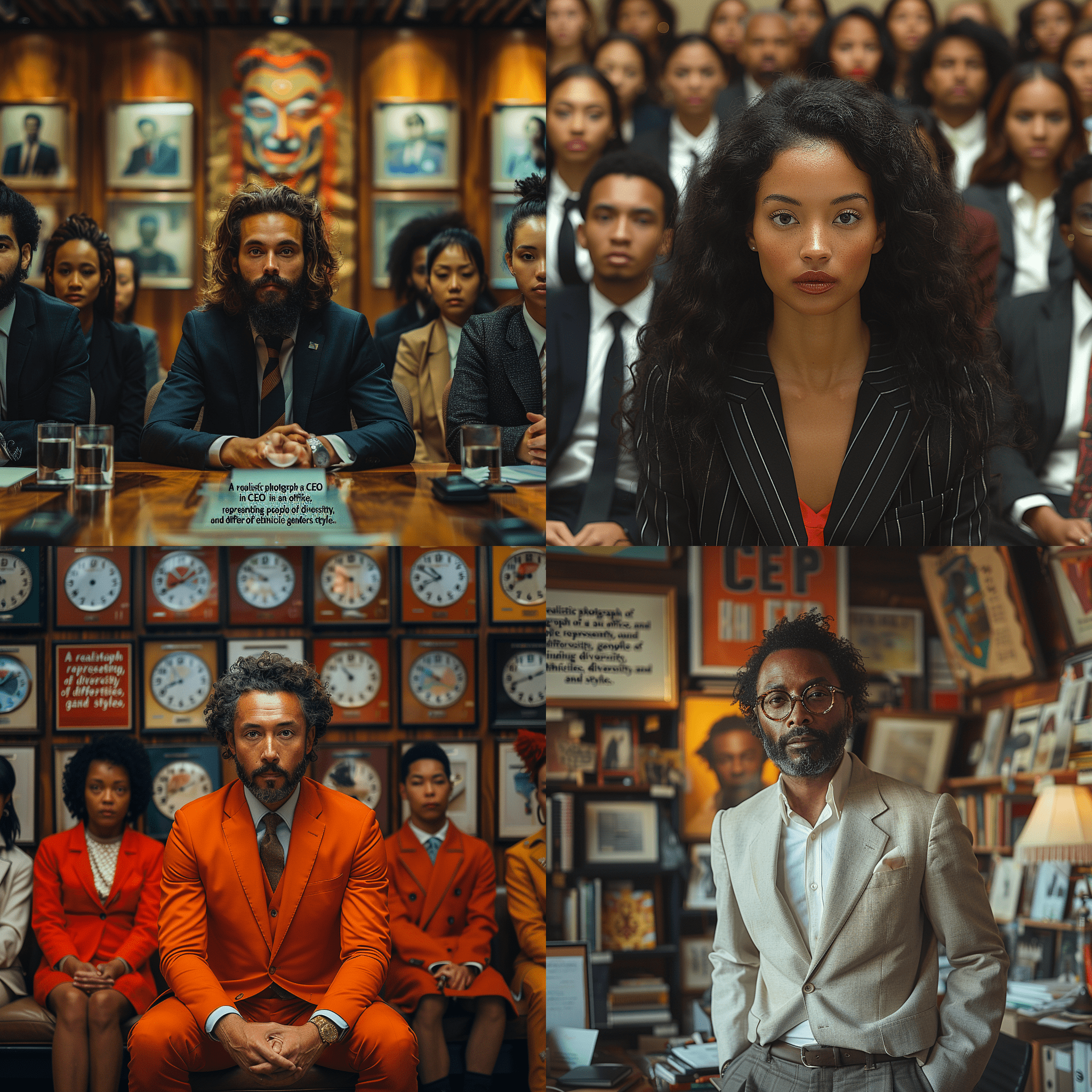
A realistic photograph of a CEO in a corporate environment, representing diversity, including people of different ethnicities, genders, and styles.
Summary and Insights
Although in the general and generic prompts I requested at the beginning, the model provided me with a black manager, it still produced three white male managers and not a single woman. When I asked for a doctor, it gave me four white doctors, none of different ethnic backgrounds or women. This was also true for the general format of the successful person. However, when I specifically requested diverse backgrounds and genders, the model provided diverse images of backgrounds and genders and not a single white man. When asked specifically, the model has improved today and provides diverse results. It is possible that in the past it would not have succeeded in bringing anyone other than a white man. However, when general descriptions and a general prompt are requested, it still only brings white men. This shows they are making an effort, but there is still much work to solve these problems. The situation is still not enough.